Master How to Play Craps for Beginners: Your Ultimate Guide
how to play craps for beginners

Master How to Play Craps for Beginners: Your Ultimate Guide

Demystify the craps table and confidently place your first bets with this simple, step-by-step introduction.

Start Rolling!

Key Takeaways

  • ✓ Craps is played with two dice, and bets are placed on the outcome of the roll.
  • ✓ The 'Pass Line' and 'Don't Pass Line' are the fundamental bets for beginners.
  • ✓ Understanding the 'Point' is crucial to following the game's flow.
  • ✓ Always bet within your means and understand the house edge for each wager.

How It Works

1
Learn the Basic Bets

Start with Pass Line or Don't Pass Line bets, as these are the easiest to understand. These foundational wagers cover the main flow of the game.

2
Understand the 'Point'

If a 4, 5, 6, 8, 9, or 10 is rolled on the 'come-out' roll, that number becomes the 'Point'. The goal then shifts to rolling the Point again before a 7.

3
Place Odds Bets (Optional)

Once a Point is established, you can place 'Odds' bets, which have no house edge. These are some of the best bets in the casino.

4
Observe Table Etiquette

Learn when to place bets, how to handle your money, and how to interact with the stickman and dealers. A respectful player makes the game enjoyable for everyone.

Demystifying the Craps Table Layout and Terminology

Elegant gamblers enjoy a night at the casino roulette table surrounded by luxury. Photo: Pavel Danilyuk / Pexels
The craps table can look intimidating at first glance, with its felt layout covered in numbers, boxes, and unfamiliar terms. However, once you break it down, it's surprisingly logical. The table is essentially a mirror image, allowing players on both sides to access the same betting options. At the center, you'll find the 'stickman' who handles the dice, calls out the rolls, and manages the center bets. On either side of the stickman are the 'boxman' (who oversees the game and handles chips) and two 'dealers' who manage the bets for players on their respective halves of the table. Understanding these roles is the first step in learning how to play craps for beginners. Let's dissect the layout. The main sections are for 'Pass Line' and 'Don't Pass Line' bets, 'Come' and 'Don't Come' bets, and 'Place' bets. You'll also see areas for 'Field' bets, 'Big 6' and 'Big 8', and a variety of 'Proposition' bets in the center. Each section corresponds to a specific type of wager. The numbers 4, 5, 6, 8, 9, and 10 are prominently displayed, representing the 'Point' numbers. Understanding where to place your chips for each bet is crucial. For instance, Pass Line bets go on the large 'Pass Line' strip, while Come bets go in the 'Come' area. Proposition bets, which are single-roll wagers, are typically handled by the stickman in the center of the table. Key terms you'll hear frequently include 'shooter' (the player rolling the dice), 'come-out roll' (the first roll of a new round), 'point' (the number established after a come-out roll), 'seven out' (rolling a 7 after a point has been established, ending the round for Pass Line bets), and 'craps' (rolling a 2, 3, or 12 on the come-out roll). Knowing these terms will help you follow the game's progression and understand the dealer's calls. Don't be afraid to ask the dealers if you're unsure about a term or where to place a bet – they are there to help, especially with new players. While the table looks complex, the core game revolves around just a few key areas, making it easier to grasp than it initially appears. Focus on the main betting areas first, and the rest will fall into place as you gain experience. Remember, the goal is to have fun and make informed decisions, and that starts with knowing your way around the table and its unique language.

Essential Bets for Beginners: Pass Line and Don't Pass Line
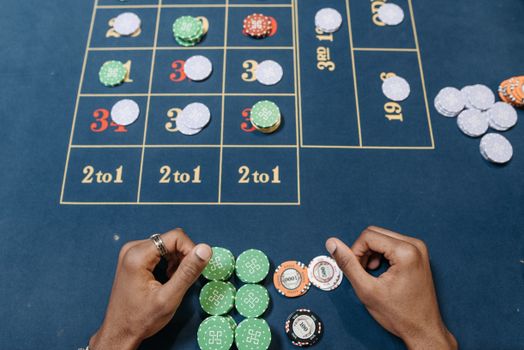
Hands arranging poker chips on a colorful casino gaming table, top view. Photo: Pavel Danilyuk / Pexels
When you're just starting to learn how to play craps for beginners, focusing on the Pass Line and Don't Pass Line bets is paramount. These two wagers form the backbone of the game and are the easiest to understand, offering some of the best odds in the casino. The **Pass Line bet** is the most common and is placed before the 'come-out roll' (the first roll of a new round). If the shooter rolls a 7 or 11 on the come-out roll, your Pass Line bet wins. This is called a 'natural.' If the shooter rolls a 2, 3, or 12 (these are called 'craps' numbers), your Pass Line bet loses. If any other number is rolled (4, 5, 6, 8, 9, or 10), that number becomes the 'Point.' The puck on the table will be flipped to the 'ON' side and placed on that number. The goal then shifts: the shooter must roll the Point number again before rolling a 7. If the Point is rolled first, your Pass Line bet wins. If a 7 is rolled before the Point, your Pass Line bet loses, and this is called a 'seven out.' This bet is betting *with* the shooter, which is why it's so popular and often has a celebratory atmosphere. Conversely, the **Don't Pass Line bet** is essentially the opposite of the Pass Line. You're betting *against* the shooter, though it's often referred to as betting 'with the house' or 'the dark side.' On the come-out roll, if the shooter rolls a 2 or 3, your Don't Pass bet wins. If a 7 or 11 is rolled, your Don't Pass bet loses. If a 12 is rolled, it's a 'push' or 'bar' (neither wins nor loses), meaning your bet is returned. This is the main difference from the Pass Line, as a 12 would typically lose for the Pass Line. If a Point is established (4, 5, 6, 8, 9, or 10), your Don't Pass bet wins if a 7 is rolled *before* the Point number. If the Point number is rolled before a 7, your Don't Pass bet loses. While less popular due to its 'against the shooter' nature, the Don't Pass Line offers slightly better odds than the Pass Line due to the 12 being a push. Both the Pass Line and Don't Pass Line bets have a relatively low house edge (1.41% for Pass Line, 1.36% for Don't Pass Line), making them excellent choices for beginners. They allow you to follow the game's rhythm without needing to understand the more complex, single-roll proposition bets. Once you're comfortable with these two, you can then explore adding 'Odds' bets, which we'll discuss next, to further reduce the house's advantage and enhance your playing strategy.

Advanced Betting Options: Taking and Laying Odds
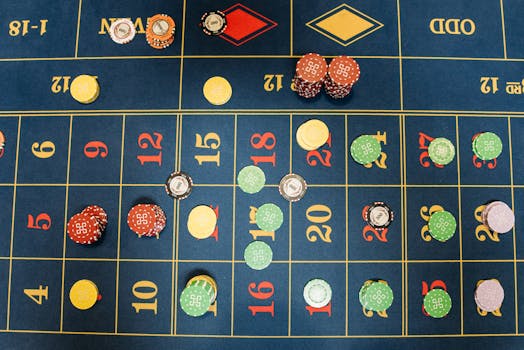
Aerial view of a roulette table with colorful poker chips showing a vibrant gambling scene. Photo: Pavel Danilyuk / Pexels
Once you've mastered the Pass Line and Don't Pass Line bets, the next logical step in learning how to play craps for beginners is to understand 'Odds' bets. These are arguably the best bets in the casino because they carry **no house edge**. That's right – zero! The casino makes its money on your initial Pass/Don't Pass bet, but the Odds bet pays out at true mathematical odds, making it a powerful tool for savvy players. **Taking Odds (for Pass Line bettors):** After a Point number (4, 5, 6, 8, 9, or 10) has been established on the come-out roll, Pass Line bettors can place an 'Odds' bet behind their original Pass Line wager. This bet is a multiple of your initial Pass Line bet, and the maximum multiple allowed (e.g., 2x, 3x, 5x, 10x, or even 100x) varies by casino. If the Point number is rolled again before a 7, both your Pass Line bet and your Odds bet win. The Odds bet pays out as follows: * **Point of 4 or 10:** Pays 2 to 1 * **Point of 5 or 9:** Pays 3 to 2 * **Point of 6 or 8:** Pays 6 to 5 For example, if you have a $10 Pass Line bet and the Point is 4, you can place a $20 Odds bet behind it (assuming 2x odds). If a 4 is rolled, your $10 Pass Line wins $10, and your $20 Odds bet wins $40 (2 to 1). If a 7 is rolled, both bets lose. This significantly boosts your potential winnings without increasing the house's statistical advantage on that portion of your wager. **Laying Odds (for Don't Pass Line bettors):** For those betting on the Don't Pass Line, you can also 'Lay Odds' after a Point has been established. This bet is placed above your Don't Pass wager. You are essentially betting that a 7 will be rolled before the Point number. The payouts are the inverse of Taking Odds, and you typically have to wager more to win less, but remember, there's still no house edge. * **Point of 4 or 10:** Pays 1 to 2 * **Point of 5 or 9:** Pays 2 to 3 * **Point of 6 or 8:** Pays 5 to 6 For instance, if you have a $10 Don't Pass bet and the Point is 4, you might lay $20 in Odds. If a 7 is rolled, your $10 Don't Pass wins $10, and your $20 Odds bet wins $10 (1 to 2). If a 4 is rolled, both bets lose. While it feels counterintuitive to lay more to win less, the lack of house edge makes it mathematically sound. Understanding and utilizing Odds bets is a hallmark of a smart craps player. By backing up your initial Pass/Don't Pass bets with Odds, you effectively reduce the overall house edge on your total wager, giving you a better long-term chance. Always check the maximum odds allowed at the table, as taking the maximum odds is generally the best strategy for minimizing the house advantage.

Smart Strategies and Common Pitfalls for New Craps Players

Elegant gamblers enjoy a night at the casino roulette table surrounded by luxury. Photo: Pavel Danilyuk / Pexels
Even after learning how to play craps for beginners, approaching the table with a smart strategy and awareness of common pitfalls can significantly enhance your experience and protect your bankroll. Craps is an exciting game, but excitement can lead to impulsive decisions. **Smart Strategies:** * **Start Simple:** As emphasized, begin with Pass Line/Don't Pass Line bets and their corresponding Odds. These are the foundation and offer the best odds. Don't be tempted by the high payouts of proposition bets early on. * **Maximize Odds Bets:** Always take or lay the maximum odds allowed by the casino. Since Odds bets have no house edge, they are mathematically the best way to reduce the overall casino advantage on your total wager. * **Manage Your Bankroll:** Before you even sit down, decide how much money you are willing to lose and stick to it. Never chase losses. Craps can be fast-paced, so it's easy to get carried away. * **Observe Before Playing:** Watch a few rounds to get a feel for the game's rhythm, the dealers' calls, and how bets are placed and paid. This can help you feel more comfortable when it's your turn. * **Play at Less Crowded Tables (Initially):** A less busy table allows you more time to think, place bets, and ask questions without feeling rushed. This is invaluable when you're still learning the ropes. * **Understand Table Minimums and Maximums:** Be aware of the betting limits. Sometimes, higher minimums can quickly deplete a beginner's bankroll. **Common Pitfalls to Avoid:** * **Jumping into Proposition Bets:** The center of the table is for 'Prop Bets' (e.g., Any Craps, Any Seven, Horn bets). While they offer high payouts, they also have a significantly higher house edge (often 10% or more). As a beginner, steer clear of these until you're very comfortable and only if you're feeling adventurous with a small portion of your bankroll. * **Betting on the 'Big 6' or 'Big 8':** These bets are prominently displayed, but they are identical to placing a 'Place Bet' on 6 or 8, but with worse odds. A Place Bet on 6 or 8 pays 7 to 6 (house edge 1.52%), while the Big 6/8 pays even money (house edge 9.09%). Always use the Place Bet for these numbers. * **Betting Too Much, Too Soon:** The excitement of the game can lead to over-betting. Stick to your bankroll management plan. It's better to make smaller, smarter bets and enjoy longer playing time. * **Not Knowing When to Quit:** Whether you're up or down, having a predetermined win goal or loss limit can help you walk away with some winnings or prevent further losses. Don't let emotion dictate your decisions. * **Ignoring Table Etiquette:** Don't throw chips onto the table, especially when the dice are out. Place your bets clearly and wait for the dealer to acknowledge them. Be respectful of other players and the crew. A polite player often receives more patience and assistance from the dealers. * **Misunderstanding Payouts:** While dealers are there to pay correctly, understanding how much you should be paid for common bets can prevent misunderstandings and help you track your game better. By focusing on simple, low-house-edge bets, managing your money wisely, and avoiding the common high-risk pitfalls, you can enjoy craps as a beginner and build a solid foundation for future play. Remember, the goal is to have fun and potentially win, not to gamble away your entire bankroll on impulse.

Comparison

FeaturePass Line Bet (with Max Odds)Don't Pass Line Bet (with Max Odds)Place Bet 6 or 8Any Craps Bet
House Edge (approx.)0.85% (with 3x-4x-5x odds)0.76% (with 3x-4x-5x odds)1.52%11.11%
When to BetCome-out rollCome-out rollAny time after Point establishedAny time
Complexity for BeginnersLowLow to MediumMediumLow
Betting with Shooter✓ (often)✗ (against common outcome)

What Readers Say

"This guide on how to play craps for beginners was a lifesaver! I went to the casino feeling completely lost, but after reading this, I confidently placed my first Pass Line bet and even understood the Odds. Highly recommend for any newbie."

Sarah J. · Las Vegas, NV

"I always found craps intimidating, but this article broke it down perfectly. The explanations of Pass Line and Don't Pass were so clear. I finally feel ready to approach the table without fear."

Michael D. · Atlantic City, NJ

"Following this beginner's guide, I managed to play for two hours at a $10 table and left with a small profit! Understanding the odds bets truly made a difference in my strategy. It actually works!"

Jessica L. · Reno, NV

"The guide is excellent for the basics. I wish there was a bit more on specific table etiquette beyond just not throwing chips, but it's still the best resource I've found for learning how to play craps for beginners. Very thorough."

David R. · Biloxi, MS

"I used this guide to learn craps on an online simulator before hitting a real casino. It translated perfectly to the digital game, helping me practice bets and understand the flow without any pressure. Fantastic resource!"

Emily P. · Online Player

Frequently Asked Questions

What is the absolute easiest bet for a beginner in craps?

The easiest and most recommended bet for a beginner is the 'Pass Line' bet. You simply place your chip on the 'Pass Line' area before the shooter's first roll (the come-out roll). If a 7 or 11 is rolled, you win. If a 2, 3, or 12 is rolled, you lose. Any other number becomes the 'Point,' and you win if the Point is rolled again before a 7. It's straightforward and betting with the majority of players.

Is craps a difficult game to learn for beginners?

Craps can appear difficult due to its fast pace and complex table layout, but the core game and basic bets are quite simple. By focusing on just a few key bets like the Pass Line and taking Odds, beginners can quickly grasp the game and have a lot of fun without needing to understand every single wager on the table.

How do I place an Odds bet in craps?

To place an Odds bet (after a Point has been established for your Pass Line bet), you simply place your chips directly behind your initial Pass Line bet, just outside the Pass Line strip. The dealer will understand this is an Odds bet. For Don't Pass, you place your chips just above your Don't Pass bet, and the dealer will move them to the correct position for Laying Odds. Always state your intention if unsure.

How much money do I need to start playing craps as a beginner?

The amount you need depends on the table minimums and how long you want to play. For a $5 or $10 minimum table, a bankroll of $100-$200 is a good starting point for a beginner. This allows for several rounds of play, especially if you're only making basic bets with small odds, and accounts for potential losses without depleting your funds too quickly.

Is betting on the 'Don't Pass Line' better than the 'Pass Line'?

Mathematically, the Don't Pass Line bet has a slightly lower house edge (1.36% vs. 1.41% for Pass Line), making it marginally 'better' in terms of odds. However, you are betting against the shooter, which can feel counter-intuitive to the social atmosphere of the craps table. For beginners, the difference in house edge is minimal, so choose the bet that makes you most comfortable.

Who should use this guide on how to play craps for beginners?

This guide is perfect for anyone who is completely new to craps and feels overwhelmed by the game, has never played before, or wants to understand the fundamental rules and best beginner bets before stepping up to a live or online craps table. It's designed to build confidence and provide a solid foundation.

What are the biggest risks for a beginner playing craps?

The biggest risks for beginners include getting carried away by the fast pace and betting more than they can afford, placing high-house-edge proposition bets (like Any Seven or Horn bets) without understanding the odds, and not managing their bankroll effectively. Sticking to low-house-edge bets and setting limits are crucial for managing risk.

Will craps eventually be replaced by digital versions, or will live tables remain popular?

While digital and online craps games are becoming increasingly sophisticated and popular, the unique social energy and camaraderie of a live craps table are difficult to replicate. The interaction with dealers, stickmen, and other players, along with the physical act of rolling the dice, are core to the craps experience. It's highly likely that live craps tables will continue to thrive alongside their digital counterparts.

Ready to take your newfound knowledge to the craps table? This guide on how to play craps for beginners has equipped you with the essential understanding to start betting confidently and enjoy one of the casino's most exhilarating games. Practice responsibly and have fun!

Topics: how to play craps for beginnerscraps rules explainedcraps betting strategylearn craps tablecraps odds
Leo List
Brampton weed
Adultwork