What are the odds in Blackjack? Master the House Edge
what are the odds in blackjack

What are the odds in Blackjack? Master the House Edge

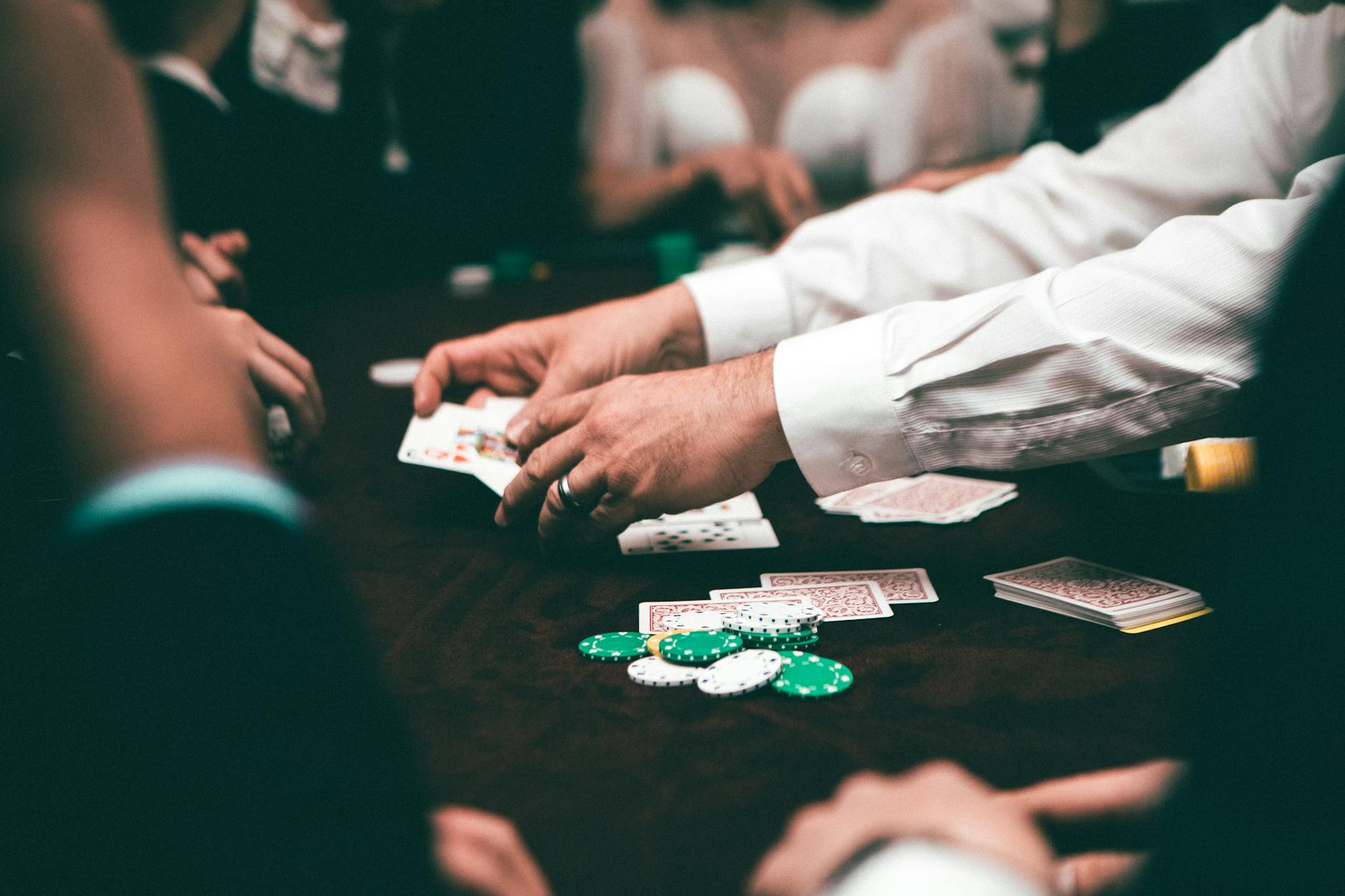
An intense poker game featuring players and poker chips on the table in an indoor setting.Photo: Javon Swaby / Pexels

What are the odds in Blackjack? Master the House Edge

Understand the probabilities and strategic decisions that influence your success at the blackjack table.

Play Smarter Now

Key Takeaways

  • ✓ The house edge in blackjack is typically around 0.5% to 2% with basic strategy.
  • ✓ Player decisions significantly impact the odds; poor play can increase the house edge to over 2%.
  • ✓ Knowing basic strategy can reduce the house advantage to its absolute minimum.
  • ✓ Side bets often carry a much higher house edge than the main game.

How It Works

1
Understand Basic Probabilities

Familiarize yourself with the likelihood of certain outcomes, like busting or getting a blackjack. This forms the foundation of strategic play.

2
Learn Basic Strategy

Memorize the optimal move for every possible hand combination against the dealer's upcard. This is crucial for minimizing the house edge.

3
Identify Game Rule Variations

Different blackjack rules (e.g., dealer hits/stands on soft 17, blackjack payout) affect the odds. Choose tables with favorable rules.

4
Practice and Apply

Consistently apply basic strategy and adapt to game variations without deviation. This is how you maintain the best possible odds over time.

Demystifying Blackjack Odds: The Core Mathematics

Blackjack, often hailed as the king of casino games, owes much of its allure to the fact that it offers some of the best odds for players, especially when compared to other popular casino staples like roulette or slot machines. But what exactly are these odds, and how can a player understand and, more importantly, influence them? At its heart, understanding what are the odds in blackjack comes down to probability and the house edge. The house edge represents the casino's built-in advantage over the player, expressed as a percentage of the player's initial bet that the casino expects to keep over the long run. For blackjack, this edge can be remarkably low, often starting below 1% when played perfectly using basic strategy. This is a crucial distinction: the odds are not static; they are dynamic and heavily influenced by the player's decisions. Unlike games of pure chance where every outcome is independent, blackjack involves a finite deck (or multiple decks) of cards, meaning probabilities change with every card dealt. For instance, the probability of getting a blackjack (an Ace and a 10-value card) on your initial two cards is approximately 4.8% from a single deck. This translates to roughly one blackjack every 21 hands. However, this is just one specific outcome. The broader probabilities revolve around the likelihood of you busting, the dealer busting, or either of you achieving a strong total without going over 21. Each decision you make – whether to hit, stand, double down, or split – directly alters the probabilities for that specific hand and, consequently, your long-term odds. Ignoring basic strategy, even for a single hand, can significantly swing the probabilities against you. For example, hitting on a hard 18 against a dealer's 7 is a statistically poor move, increasing your chances of busting and handing the advantage back to the house. The goal for any savvy player is to minimize the house edge through informed decisions, pushing their long-term expected return as close to 100% as possible. This is where the depth of blackjack strategy truly comes into play, transforming a simple card game into a strategic battle of wits and numbers. Understanding the foundational probabilities of drawing certain cards is the first step toward mastering the game and improving your chances. For more insights into optimizing your gambling experience, explore our comprehensive guide. The composition of the deck is also paramount. A deck rich in 10-value cards and Aces favors the player, as it increases the likelihood of blackjacks and dealer busts. Conversely, a deck with many small cards can be detrimental. While casual players don't count cards, understanding this fundamental principle helps appreciate why certain strategies are effective. The dealer's upcard provides a critical piece of information that basic strategy leverages. If the dealer shows a weak card (like a 4, 5, or 6), their probability of busting is higher, encouraging the player to stand on lower totals. If the dealer shows a strong card (like a 7, 8, 9, 10, or Ace), their likelihood of making a strong hand is greater, prompting the player to hit more aggressively to improve their own total. These are not arbitrary rules; they are derived from extensive mathematical simulations of millions of hands, all designed to identify the move that yields the highest expected return for the player over time. Thus, when asking what are the odds in blackjack, the answer is complex yet empowering: they are largely in your hands, dictated by your adherence to mathematically sound strategy.

How Player Decisions Impact Blackjack Probability and House Edge

The beauty and complexity of blackjack lie in the direct correlation between player decisions and the game's probabilities. Unlike slot machines where each spin is independent, or roulette where every ball drop is a fresh start, blackjack is a game of continuous probability. Every card dealt changes the composition of the remaining deck, and every choice you make influences the outcome of your hand and, consequently, your long-term success. This is where the concept of 'basic strategy' becomes indispensable. Basic strategy is a mathematically derived set of rules that dictates the optimal decision for every possible player hand against every possible dealer upcard. Adhering to basic strategy is not about guaranteeing a win on every hand, but about making the decision that minimizes the house edge over the long run, maximizing your expected return. Consider a few examples. If you have a hard 16 (a hand without an Ace, summing to 16) and the dealer shows a 10, basic strategy advises you to hit. Why? Because while hitting carries a significant risk of busting, standing against a dealer's 10 has an even higher probability of losing, as the dealer is likely to make a hand of 17 or higher. Conversely, if you have a hard 12 and the dealer shows a 5, basic strategy advises you to stand. In this scenario, the dealer has a high probability of busting (around 42% with a 5 upcard), so risking a bust yourself by hitting would be a statistically inferior move. Each decision, whether to hit, stand, double down, or split, is calculated to give you the highest possible probability of winning or, failing that, the lowest probability of losing. Failing to follow basic strategy, even occasionally, directly increases the house edge. For instance, if a player consistently makes poor decisions, like hitting on a hard 19 or standing on a hard 12 against a dealer's 10, the house edge can easily climb from its standard 0.5% to 2% or even higher. This transforms blackjack from one of the most player-favorable games into one that quickly drains a bankroll. The variance in outcomes can mask the impact of poor strategy in the short term – you might get lucky with a bad decision here and there – but over hundreds or thousands of hands, the mathematical advantage of basic strategy becomes undeniable. Therefore, a deep understanding of what are the odds in blackjack inherently requires a commitment to learning and implementing basic strategy. It's the player's most powerful tool against the casino's inherent edge and the key to turning the game from a random gamble into a calculated challenge. The impact of player decisions is so profound that it differentiates blackjack from almost every other casino game, giving the player a genuine opportunity to influence their own fate.

Advanced Odds and Rule Variations: Further Reducing the House Edge

While basic strategy forms the bedrock of optimal blackjack play, understanding advanced odds and the impact of specific rule variations can further refine your approach and potentially reduce the house edge even more. Not all blackjack tables are created equal, and the subtle differences in rules can significantly shift what are the odds in blackjack. Savvy players actively seek out tables with the most favorable rules to maximize their advantage. One of the most impactful rules is whether the dealer hits or stands on a soft 17 (a 17 with an Ace, like Ace-6). If the dealer stands on soft 17 (S17), it's more favorable for the player, reducing the house edge by approximately 0.2%. If the dealer hits on soft 17 (H17), the house edge increases. This seemingly small detail has a measurable effect over time. Another critical rule is the payout for a natural blackjack. The standard and most favorable payout is 3:2, meaning a $10 bet wins $15. However, some casinos have introduced 6:5 blackjack tables, where a $10 bet only wins $12. This rule alone increases the house edge by a staggering 1.4% to 2%, effectively turning a good game into a very poor one. Players should always avoid 6:5 blackjack tables. Other rule variations include the number of decks used (fewer decks generally slightly favor the player, though the impact is less than S17 vs. H17 or blackjack payout), whether doubling down is allowed after splitting, the ability to re-split Aces, and surrender options (early or late). Each of these rules has a calculated impact on the overall house edge. For instance, allowing late surrender (giving up half your bet if you don't like your hand after the dealer checks for blackjack) can reduce the house edge by around 0.08%, while allowing doubling down after splitting can shave off another 0.13%. Beyond basic strategy and rule variations, advanced techniques like card counting, while not legal in all jurisdictions and often discouraged by casinos, are based entirely on understanding the changing probabilities of the remaining deck. By keeping a mental tally of high and low cards that have been played, a card counter can estimate when the deck is 'rich' in high-value cards (10s and Aces), which is advantageous to the player. When the deck is favorable, the player increases their bets, and when it's unfavorable, they decrease them. This strategy aims to turn the house edge into a player edge, albeit a small one. However, card counting requires significant skill, concentration, and often comes with the risk of being detected and asked to leave the casino. For the average player, focusing on mastering basic strategy and selecting tables with optimal rules (3:2 blackjack payout, dealer stands on soft 17, liberal splitting and doubling rules) is the most practical and effective way to ensure the best possible odds in blackjack. Learn more about responsible gambling practices to ensure a positive experience. Ignoring these factors means you're giving away a significant portion of your potential returns, simply by choosing a less favorable game or making sub-optimal choices.

Common Mistakes That Worsen Your Blackjack Odds

Even with a basic understanding of what are the odds in blackjack, many players fall prey to common mistakes that significantly inflate the house edge and erode their bankroll faster than necessary. Avoiding these pitfalls is as crucial as knowing basic strategy. Here are some of the most frequent errors: * **Ignoring Basic Strategy:** This is by far the biggest mistake. Deviating from the mathematically proven basic strategy, even based on 'gut feelings' or 'hunches,' immediately increases the house edge. Every deviation represents a statistically inferior decision. Many casinos offer basic strategy cards; use them, especially when learning. * **Playing 6:5 Blackjack Tables:** As mentioned, a 6:5 payout for blackjack dramatically increases the house edge by 1.4% or more. Always seek out tables that pay 3:2 for a natural blackjack. This single rule can be the difference between a playable game and a bankroll-burner. * **Taking Insurance:** The 'insurance' bet is offered when the dealer shows an Ace. It's essentially a side bet that the dealer has blackjack. While it might seem appealing to protect your hand, insurance is almost always a bad bet for the player, carrying a house edge of around 5.9% to 7.4%. Avoid it unless you are an advanced card counter and know the deck is rich in 10-value cards. * **Chasing Losses:** This is a psychological trap. After a series of losses, players might increase their bets drastically or abandon strategy in an attempt to win back lost money quickly. This often leads to even greater losses and compounds the negative impact of poor odds. * **Playing While Distracted or Impaired:** Blackjack requires focus and clear decision-making. Playing while tired, under the influence of alcohol, or distracted by other activities makes it harder to stick to basic strategy and increases the likelihood of costly errors. * **Mismanaging Your Bankroll:** Not setting a budget or betting more than you can afford to lose is a recipe for disaster. Proper bankroll management helps you stay in the game longer and ride out inevitable losing streaks without going broke. * **Making Side Bets:** Most blackjack side bets (e.g., Perfect Pairs, 21+3) come with a significantly higher house edge than the main game, often ranging from 2% to over 10%. While they offer the allure of big payouts, they are designed to take your money faster. Stick to the main game to keep the odds in your favor. By consciously avoiding these common mistakes, players can maintain the best possible odds in blackjack, making their playing experience more enjoyable and potentially more profitable over the long term. It's not just about knowing what to do, but also knowing what *not* to do.

Comparison

FeatureOptimal Blackjack PlayAverage Player PlayPoor Blackjack Play
House Edge0.5% - 1%1.5% - 2.5%2.5% - 5%+
Basic Strategy UseAlwaysSometimesRarely
Blackjack Payout3:2Mix of 3:2 & 6:5Mostly 6:5
Insurance BetSometimes
Side BetsSometimes
Dealer H/S on Soft 17S17 PreferredNo PreferenceNo Preference

What Our Readers Say

5 ★★★★★

"This article finally clarified what are the odds in blackjack for me. Understanding the house edge and basic strategy made my last trip so much more fun and I actually walked away ahead!"

5 ★★★★★

"I used to just guess, but after reading this, I printed out a basic strategy card. My confidence and my win rate have both improved significantly. Truly helpful information."

5 ★★★★★

"The explanation of how different rules impact the odds was a game-changer. I now actively seek out 3:2 tables and avoid H17. It's a small change, but it really adds up."

4 ★★★★☆

"Very comprehensive guide. I knew some basic strategy, but the section on common mistakes highlighted a few bad habits I had developed. It's a must-read for any blackjack player."

5 ★★★★★

"As an online player, I appreciate the detailed breakdown of what are the odds in blackjack. It helped me understand why some online tables felt 'tighter' than others. Excellent resource!"

Frequently Asked Questions

What is the best possible house edge in blackjack?
With optimal rules (3:2 blackjack payout, dealer stands on soft 17, liberal splitting and doubling) and perfect basic strategy, the house edge can be as low as 0.28% to 0.5%.
Does card counting make my odds better?
Yes, card counting can theoretically shift the odds slightly in the player's favor by indicating when to increase bets. However, it's difficult to master, often discouraged by casinos, and doesn't guarantee wins.
How can I learn basic blackjack strategy effectively?
You can learn basic strategy by using an online trainer, memorizing a strategy chart, or even bringing a strategy card to the table (where permitted). Consistent practice is key to internalizing the decisions.
Are online blackjack odds the same as live casino odds?
Generally, online blackjack games use the same mathematical principles and odds as live games. However, rule variations (like 6:5 payouts or dealer hitting soft 17) can be more prevalent online, so always check the specific game rules.
Is insurance a good bet in blackjack?
For most players, insurance is a poor bet with a high house edge (around 5.9% to 7.4%). It should generally be avoided as it detracts from your overall favorable odds in the main game.
Who benefits most from understanding blackjack odds?
Anyone who plays blackjack, from casual enthusiasts to serious strategists, benefits from understanding the odds. It empowers players to make informed decisions, minimize losses, and maximize their potential for winning.
What are the risks if I don't use basic strategy?
Without basic strategy, the house edge in blackjack can increase significantly, often to 2% or more, depending on the severity of your deviations. This means you will lose money much faster over time.
Will blackjack odds change in the future?
The fundamental mathematical odds of blackjack are constant. However, casinos may continue to introduce rule variations (like more 6:5 tables or different side bets) that alter the house edge, making it crucial for players to stay informed about table rules.

Armed with a clear understanding of what are the odds in blackjack, you're now ready to approach the table with confidence. Apply these strategies, choose your games wisely, and transform your blackjack experience from mere chance into a calculated and enjoyable endeavor.

Topics: what are the odds in blackjackblackjack house edgeblackjack probabilityblackjack strategyblackjack odds chart
Leo List
Brampton weed
Adultwork