What Are The Odds in Blackjack? Master Your Strategy
what are the odds in blackjack

What Are The Odds in Blackjack? Master Your Strategy

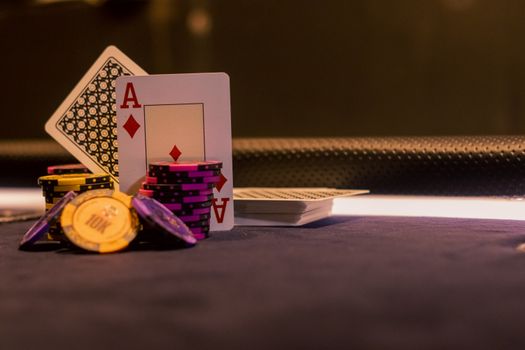
A close-up of poker chips and playing cards on a casino gaming table, highlighting Ace of Diamonds.Photo: Elian Emanuel Coutinho Roehrs / Pexels

What Are The Odds in Blackjack? Master Your Strategy

Unlock the secrets of blackjack odds and transform your gameplay from novice to a strategic advantage-player.

Improve Your Odds Now

Key Takeaways

  • ✓ The house edge in blackjack can be as low as 0.5% with optimal strategy.
  • ✓ Basic strategy can reduce the house edge by approximately 1-2%.
  • ✓ Player decisions significantly impact the odds in blackjack, unlike pure games of chance.
  • ✓ Counting cards can shift the advantage to the player, but it's not illegal, though casinos discourage it.

How It Works

1
Understand Basic Blackjack Rules

Before diving into odds, grasp the fundamental rules: getting as close to 21 without busting, and beating the dealer's hand. This forms the foundation for strategic play.

2
Learn Basic Strategy Charts

Memorize or use a basic strategy chart that dictates the mathematically optimal play for every possible hand combination against the dealer's upcard. This is crucial for minimizing the house edge.

3
Recognize Game Rule Variations

Different blackjack tables have varying rules (e.g., dealer hits/stands on soft 17, blackjack payout). These rules directly affect the house edge and your odds, so always check them.

4
Practice and Apply Strategy

Consistent practice, either online or in a low-stakes environment, helps embed the basic strategy. Applying it without deviation is key to realizing the improved odds.

Demystifying the House Edge: What Are the Odds in Blackjack?

Dealer hands distributing cards at a casino blackjack table with chips in view.Photo: Pavel Danilyuk / Pexels
Blackjack is unique among casino games because player decisions directly influence the outcome and, consequently, the odds. Unlike roulette or slot machines, where each spin or pull is an independent event with fixed probabilities, blackjack offers a dynamic environment where skilled play can significantly reduce the casino's built-in advantage, known as the house edge. Understanding what are the odds in blackjack begins with grasping this fundamental concept. The house edge represents the average percentage of each bet the casino expects to keep over the long run. For a typical blackjack game, this edge can range from a substantial 2-5% for players who don't employ any strategy, down to an incredibly slim 0.5% or even less for those who master basic strategy and play perfectly. This small percentage difference is monumental when considering long-term play. A 0.5% house edge means that for every $100 wagered, the casino expects to profit $0.50. While this might seem negligible on a single hand, it adds up over thousands of hands, highlighting why understanding and reducing this edge is paramount for any serious player. Several factors contribute to the house edge in blackjack, and recognizing them is crucial for a player looking to improve their odds. These factors include the number of decks used, whether the dealer hits or stands on a soft 17 (an Ace and a 6), the payout for a natural blackjack (typically 3:2, but sometimes 6:5, which is detrimental to the player), and rules regarding splitting, doubling down, and surrender. For instance, a game paying 6:5 for blackjack instead of 3:2 immediately increases the house edge by over 1.3%, effectively doubling or tripling the casino's advantage right off the bat. This single rule change is a prime example of why knowing the specific rules of the table you're playing at is as important as knowing basic strategy. Players often overlook these nuances, assuming all blackjack games are created equal, but this couldn't be further from the truth. Always scrutinize the table rules before sitting down. The fewer decks generally favor the player slightly, as it makes card counting marginally easier and affects certain probabilities. However, casinos often counteract this by imposing less favorable rules on single or double-deck games. The interplay of these rules creates a complex web of probabilities that, when understood, allows a player to seek out the most favorable playing conditions. This diligent approach is the first step in genuinely improving what are the odds in blackjack in your favor. Responsible gambling also emphasizes understanding these odds.

Mastering Basic Strategy: Your Key to Better Blackjack Odds

A casino dealer handling cards at a gaming table, ready for blackjack or poker.Photo: Anna Shvets / Pexels
The most impactful way to improve what are the odds in blackjack is by consistently applying basic strategy. Basic strategy is a mathematically derived set of rules that dictates the optimal play for every possible hand combination you can have against every possible dealer upcard. It’s not about guessing or intuition; it’s about making the decision that gives you the highest probability of winning or the lowest probability of losing in the long run. This strategy was developed through extensive computer simulations of millions of blackjack hands, identifying the play that maximizes expected return. By adhering strictly to basic strategy, a player can reduce the house edge to its absolute minimum, often below 1% and sometimes as low as 0.2% to 0.5%, depending on the specific rules of the game. For many players, especially beginners, the idea of memorizing a complex chart can seem daunting. However, numerous resources are available, from printable basic strategy cards (often allowed at the table, though check casino rules) to online interactive trainers. The effort invested in learning basic strategy pays dividends by significantly narrowing the gap between player and casino. It transforms blackjack from a game of chance into a game of skill, where informed decisions directly translate to better outcomes. Let's delve into some common basic strategy decisions and their impact on what are the odds in blackjack. For example, if you have a hard 16 (a hand without an Ace, totaling 16) and the dealer shows a 6, basic strategy dictates that you should stand. Many players, fearing a low total, might hit, but statistically, standing is the better long-term play against a dealer's 6, as the dealer is more likely to bust. Conversely, if you have a hard 12 and the dealer shows a 2 or 3, basic strategy advises to hit, even though there's a risk of busting. These seemingly counter-intuitive plays are precisely what distinguish optimal strategy from gut feelings. Another crucial aspect is splitting pairs. For instance, always split Aces and Eights, regardless of the dealer's upcard. Splitting Aces gives you two chances at a natural blackjack, and splitting Eights turns two losing hands (a hard 16) into two potentially winning hands. Never split Fives or Tens, as a pair of Fives is a strong starting point for a double down, and two Tens is a powerful 20 that you wouldn't want to break up. Doubling down on a 10 or 11 when the dealer shows a weak card (2-9) is also a powerful move, as it allows you to double your potential winnings when you have a statistical advantage. Each of these strategic plays is designed to capitalize on the probabilities, shifting the odds incrementally in your favor. Consistent application of these rules is the bedrock of successful blackjack play and the most accessible path to improving your winning chances. Understanding blackjack rules is step one.

Advanced Techniques: Card Counting and Its Effect on Blackjack Odds

An intense poker game featuring players and poker chips on the table in an indoor setting.Photo: Javon Swaby / Pexels
While basic strategy levels the playing field, advanced techniques like card counting can actually give the player an advantage over the casino. Understanding what are the odds in blackjack at this level moves beyond simply reducing the house edge to actively flipping it in the player's favor. Card counting isn't about memorizing every card played; rather, it's a system to keep track of the ratio of high-value cards (Tens, Jacks, Queens, Kings, Aces) to low-value cards (2s, 3s, 4s, 5s, 6s) remaining in the shoe. When there's a higher proportion of high cards left, the deck is considered 'rich,' favoring the player. This is because high cards are beneficial for both getting natural blackjacks (which pay 3:2) and for the dealer to bust when they have to hit on a stiff hand (12-16). Conversely, a 'poor' deck with many low cards remaining favors the dealer. The most common and widely taught card counting system is the Hi-Lo count, where specific values are assigned to cards (+1 for low cards, -1 for high cards, 0 for middle cards). Players maintain a 'running count' as cards are dealt, then convert it into a 'true count' by dividing by the estimated number of decks remaining. This true count informs betting decisions and strategic deviations from basic strategy. When the true count is positive, meaning the deck is rich in high cards, the player increases their bet size because their probability of winning the next hand has increased. Conversely, when the true count is negative or neutral, the player bets the minimum or sits out hands. Card counting also allows for strategic deviations from basic strategy. For example, if the true count is very high, a player might hit a hard 16 against a dealer's 10, whereas basic strategy would normally dictate standing. These deviations are designed to exploit the current composition of the deck. It's crucial to understand that card counting does not guarantee a win on every hand; it merely shifts the long-term mathematical advantage to the player. The edge gained from card counting is typically modest, often in the range of 0.5% to 2%, but over thousands of hands, this translates into expected profit. However, casinos are vigilant about card counters. While not illegal, casinos reserve the right to refuse service to anyone, and they actively look for players who are varying their bets significantly and playing perfectly. Spotting a card counter can lead to being asked to leave the table, or even the casino. Therefore, while card counting can dramatically impact what are the odds in blackjack for a skilled player, it requires significant practice, discipline, and an awareness of casino countermeasures. It's a high-level skill that demands dedication beyond simple basic strategy mastery. Explore our blackjack glossary for more terms.

Tips for Maximizing Your Winning Chances and Avoiding Common Pitfalls

A casino dealer handling cards at a gaming table, ready for blackjack or poker.Photo: Anna Shvets / Pexels
To truly maximize your winning chances and understand what are the odds in blackjack in a practical sense, it's not just about knowing the math, but also about smart play and discipline. Beyond basic strategy, several practical tips can significantly improve your overall experience and profitability at the blackjack table. First and foremost, always choose tables with favorable rules. Prioritize tables that pay 3:2 for a natural blackjack – avoid 6:5 tables at all costs, as they drastically increase the house edge. Look for games where the dealer stands on a soft 17 (S17), rather than hits (H17), as this slightly reduces the house advantage. Also, assess the number of decks; while not as impactful as payout rules, fewer decks generally offer a slight edge to the player, especially if you're venturing into card counting. Here's a list of crucial tips to enhance your blackjack odds: * **Always Play Basic Strategy:** This cannot be stressed enough. Deviating from basic strategy, even on a 'hunch,' costs you money in the long run. Use a strategy card if allowed, especially when learning. * **Manage Your Bankroll:** Set a budget for your gambling sessions and stick to it. Never chase losses. Knowing when to walk away, whether you're up or down, is a sign of a disciplined player. * **Avoid Side Bets:** Most side bets in blackjack, such as 'Perfect Pairs' or '21+3', carry a significantly higher house edge than the main game. While they offer tempting payouts, they are designed to extract more money from players over time. * **Don't Drink and Play:** Alcohol impairs judgment, leading to poor strategic decisions and increased betting. Maintain a clear head when playing blackjack. * **Practice Regularly:** Use online simulators or free play versions of blackjack to practice basic strategy until it becomes second nature. This builds confidence and speed, which are essential in a live casino setting. * **Observe Table Dynamics:** While not directly affecting odds, understanding the flow of the game, dealer's speed, and other players' habits can help you stay focused and comfortable. * **Understand When to Quit:** Recognize that blackjack, even with perfect strategy, involves variance. You won't win every session. The goal is long-term profitability or extended entertainment. Quit while you're ahead, or when you've reached your loss limit. By combining a solid understanding of what are the odds in blackjack with disciplined play and smart table selection, you can transform your blackjack experience from a gamble into a strategic endeavor with significantly improved winning prospects. These tips are not just about winning more; they're about playing smarter and ensuring a more enjoyable and sustainable gambling experience.

Comparison

FeatureOptimal Blackjack StrategyIntuitive PlayCard Counting
House Edge Impact0.2% - 0.8%2% - 5%-0.5% - -2% (Player Advantage)
ComplexityMedium (memorization)Low (gut feeling)High (practice & discipline)
Legality/AcceptanceFully acceptedFully acceptedLegal but restricted by casinos
Required Skill LevelBeginner to IntermediateNoneAdvanced
Payout for Natural Blackjack3:2 (Recommended)Often 6:5 (Avoid)3:2 (Essential)

What Our Readers Say

5 ★★★★★

"This article completely changed my perspective on what are the odds in blackjack. I used to just play on instinct, but after reading this and applying basic strategy, I've seen a noticeable improvement in my sessions. It's truly helpful!"

5 ★★★★★

"Finally, a clear explanation of the house edge and how rules impact what are the odds in blackjack. I've started checking table rules more carefully and it makes a huge difference. Highly recommend for any blackjack player."

5 ★★★★★

"I was always intimidated by blackjack, but this guide broke down the odds and strategies so well. I practiced basic strategy online after reading, and on my last trip, I actually walked away with a profit – a first for me!"

4 ★★★★☆

"The information on what are the odds in blackjack is solid, especially the emphasis on basic strategy. While card counting is fascinating, the practical advice for casual players was the most valuable for me. Great resource overall."

5 ★★★★★

"As someone who enjoys the occasional casino trip, understanding what are the odds in blackjack makes the game so much more engaging. This article gave me the confidence to play smarter, not just harder, and it's paid off in more fun and less frustration."

Frequently Asked Questions

What is the best way to improve my odds in blackjack?
The single most effective way to improve your odds in blackjack is to consistently apply basic strategy. This mathematically proven method minimizes the house edge to its lowest possible point, often below 1%, by telling you the optimal play for every hand.
Is blackjack a game of skill or luck?
Blackjack is unique in that it combines elements of both skill and luck. While the cards dealt are random (luck), your decisions on how to play those cards (skill) significantly influence the outcome and the long-term odds, making it not purely a game of chance.
How do I learn basic blackjack strategy?
You can learn basic blackjack strategy by studying strategy charts, which are widely available online and in casino gift shops. Many online casinos also offer free-play versions where you can practice applying the strategy without risking real money.
Does card counting make what are the odds in blackjack more favorable?
Yes, card counting can shift the odds in blackjack from favoring the house to favoring the player, typically by 0.5% to 2%. However, it requires significant practice, discipline, and casinos actively discourage and often prohibit it.
Are all blackjack games the same regarding odds?
No, blackjack games are not all the same. Variations in rules, such as the payout for a natural blackjack (3:2 vs. 6:5), whether the dealer hits or stands on soft 17, and the number of decks used, all significantly impact the house edge and your odds.
Who should focus on understanding blackjack odds?
Anyone who plays blackjack, from casual players to serious enthusiasts, should focus on understanding blackjack odds. It empowers players to make informed decisions, minimize losses, and maximize their enjoyment and potential for winning.
Is it safe to try and count cards in a casino?
While card counting is not illegal, casinos reserve the right to refuse service to anyone they suspect of counting cards. This often means being asked to leave the table or the premises. It's a risk that professional players accept, but casual players should be aware of the potential consequences.
What future trends might impact blackjack odds?
Future trends might include more widespread use of continuous shuffling machines (CSMs) which make card counting impossible, and further rule variations designed to increase the house edge. However, the core principles of basic strategy will likely remain relevant for traditional games.

Understanding what are the odds in blackjack is the first step towards becoming a more strategic and successful player. Armed with this knowledge, you can approach the tables with confidence, knowing you're making the best possible decisions to improve your chances of winning.

Topics: what are the odds in blackjackblackjack house edgeblackjack probabilityblackjack strategyblackjack winning chances
Leo List
Brampton weed
Adultwork